

Hardware products have evolved significantly in recent years. Where an object once relied on simple mechanics or isolated electronics, today it combines several technical components: mechanics, electronics, embedded software, and connectivity.
In this context, companies developing a product often encounter the same difficulty: each discipline progresses independently. The mechanical components are designed, then the electronics are adapted to fit, or vice versa. Problems arise late in the process, during assembly, testing, or ramp-up to production.
It is precisely to address this complexity that a mechatronic approach is required. The role of a mechatronic design office is to design the product as a whole, integrating the interactions between mechanics and electronics from the outset in order to secure the project and improve its industrial performance.

What is a mechatronics design office?
Mechatronics is an engineering discipline that combines several technical fields with a single goal: to design a coherent and high-performance system. It is based on the close integration of mechanics, electronics, and control systems.
A mechatronics design office does not simply combine different areas of expertise. It implements a co-design approach, where mechanical and electronic choices are considered together, taking into account uses, industrial constraints, and economic objectives.
Unlike mechanical or electronic design offices that work in silos, mechatronics design offices take a systemic approach. They are as interested in the interactions between components as they are in the components themselves.

The role of a mechatronics design office in a hardware project
In a hardware project, the mechatronics design office does much more than just technical design. Its role is to coordinate the various areas of expertise, anticipate interactions between the product’s components, and secure structural choices from the earliest stages. This comprehensive approach makes it possible to transform an idea or prototype into a coherent product that is ready for industrialization.
The services provided by a mechatronics design office revolve around three key missions.
Designing the product as a comprehensive system
In a mechatronic product, every technical decision has repercussions on the entire system. Mechanical design influences heat dissipation, space requirements, and vibration resistance. Electronics impose constraints in terms of integration, mounting, and sometimes cooling. The two are inseparable.
The mechatronics design office is responsible for coordinating these interactions. It arbitrates technical choices, taking into account their cross-impact, in order to ensure the consistent and reliable operation of the product as a whole.
Anticipating industrialization from the design phase onwards
One of the major contributions of a mechatronics design office lies in its ability to integrate industrial constraints at a very early stage.
This foresight helps limit rework at the end of the project, when costs and deadlines are already committed. It also secures the transition from prototype to mass production, avoiding solutions that are technically elegant but industrially fragile.
Reducing risk and accelerating development
By working across disciplines, the mechatronics design office streamlines communication between departments. Decisions are made more quickly, inconsistencies are detected earlier, and unnecessary iterations are limited.
By breaking down barriers between areas of expertise, the mechatronics design office reduces:
- unnecessary iterations,
- delays due to technical incompatibilities,
- additional industrial costs.
For a company, this translates into more controlled development, better adherence to deadlines, and greater visibility of the technical and industrial risks involved in the project.
Why a mechatronics design office makes a difference in a hardware project
In many hardware projects, difficulties arise not from a lack of technical skills, but from a lack of coordination between disciplines. When mechanical and electronic components are designed separately, problems often arise late in the process, during integration or initial testing.
An electronic card that does not fit properly into its housing, fasteners that are unsuitable for the mechanical stresses, or underestimated heat dissipation are common situations. These issues do not fall exclusively within the realm of mechanics or electronics. They arise from the interfaces between the two.
This is precisely where the mechatronics design office adds value. By working upstream on a common approach, it aligns technical decisions around a shared objective: to design a consistent, reliable, and industrializable product, without compromises at the end of the project.
This approach primarily serves to enhance the overall consistency of the product. Interactions between mechanical and electronic components are controlled, technical choices are more robust, and interfaces are designed to work together over time.
It also helps reduce indirect costs. By limiting late rework, last-minute changes, and production adjustments, the project gains in efficiency and predictability. Development times are better controlled, which speeds up time to market.
Finally, the mechatronics design office plays a key role in securing the industrial trajectory. By integrating assembly, repeatability, and ramp-up issues at a very early stage, it facilitates the transition from prototype to series production and enables companies to take this step with greater peace of mind.
The advantages of a mechatronics engineering firm
- mastery of mechanical/electronic interfaces,
- risk reduction project,
- cost and deadline control,
- preparation for industrialization and ramp-up.

The Altyor approach: product- and industry-oriented mechatronics
At Altyor, mechatronics is based on close collaboration between our mechanical design office and our electronic design office, which are integrated within the same organization. This proximity promotes smooth and continuous co-design throughout the project.
The teams work together from the earliest stages to define technical architectures, anticipate integration constraints, and prepare for industrialization. This approach ensures continuity between design, prototyping, and production, without any breaks in logic.
The goal is not only to design a product that works, but also one that can be manufactured under realistic industrial conditions, with a level of quality and reliability suited to its intended uses.

Industrial manufacturer for
over 25 years

+ More than 700,000 products/year
including 150,000 in France

Responsible manufacturing
For which projects is a mechatronics design office essential?
The mechatronic approach becomes particularly relevant when the product combines several interdependent technical components. This is particularly the case for connected products, industrial equipment, and embedded systems subject to significant mechanical and electronic constraints.
The higher the level of integration, the more interactions there are between disciplines. In these situations, the mechatronics design office plays a key role in securing the project and ensuring the consistency of the final product.
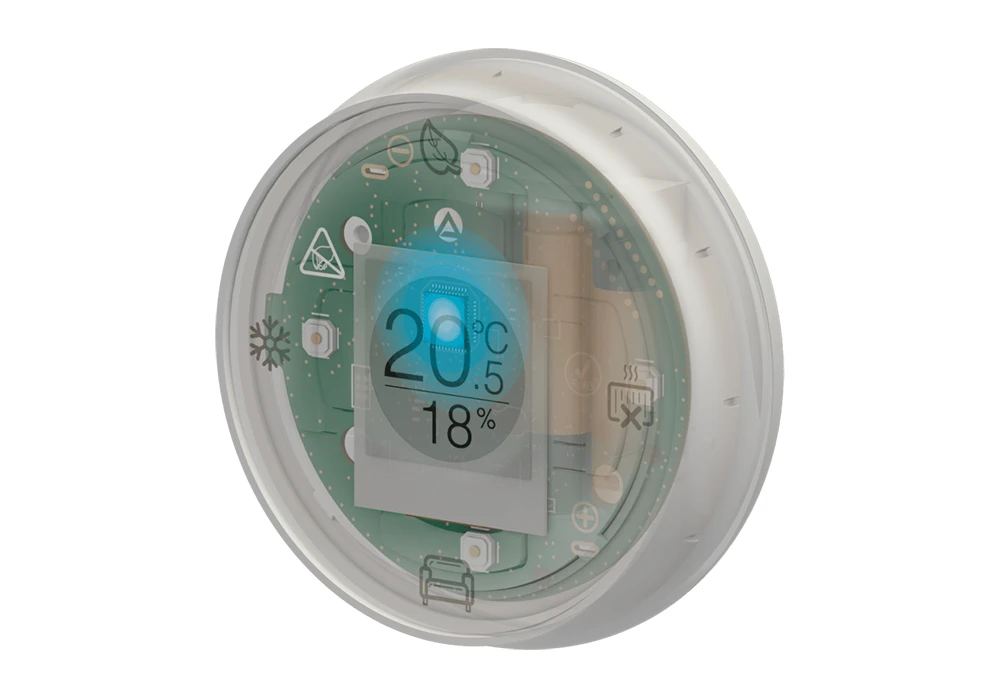
Get it right first time.
DFM, component selection, radio protocol, battery life, prototyping, qualification: 18 key points to ensure the reliability of your design and avoid costly iterations.

Mechatronics design engineering is not an option reserved for complex or high-end projects. It responds to an industrial reality: products have become systemic, and their design requires a comprehensive approach.
By considering mechanics and electronics together from the earliest stages, companies reduce risks, improve the quality of their products, and ensure their successful transition to industrial scale. It is this systems-based approach that enables technical innovations to be transformed into truly high-performance, sustainable products.
Are you working on a complex hardware product and want to secure its design and industrialization?
Our teams support companies from the design phase through to production, using a proven mechatronic approach.
👉 Contact our experts to discuss your project.
Custom Quote · Response Within 48 Hours
Get a quote tailored to your project
There’s no magic formula, just an accurate estimate prepared by our experts after we’ve understood your needs.
✓ Response within 48 hours ✓ NDA signed in advance ✓ No obligation