

In an IoT project, everything starts with data.
And it is IoT-connected sensors that make this data possible.
Whether it’s optimizing an industrial chain, tracking usage, monitoring an environment, or improving a product’s energy performance, the connected IoT sensor is the building block of any IoT system. However, behind this generic term lie technical, industrial, and strategic realities that are often underestimated.
The purpose of this article is to provide you with a clear and practical overview of IoT-connected sensors, from how they work to their industrial design, to help you make the right choices for your hardware projects.

What is an IoT connected sensor?
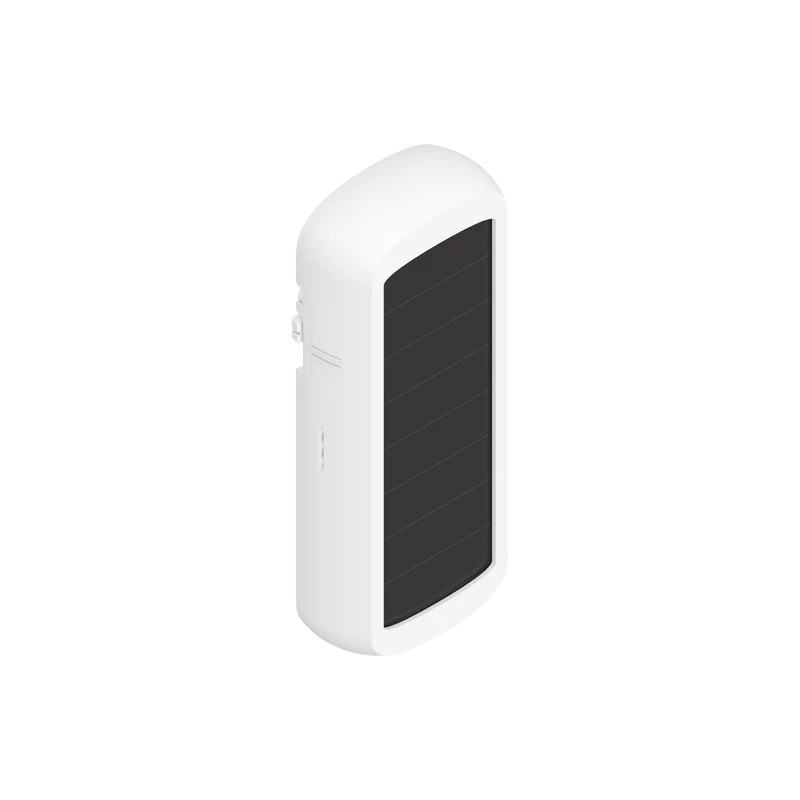
An IoT-connected sensor is a device capable of measuring a physical quantity (temperature, pressure, movement, humidity, gas, brightness, etc.), converting it into digital data, and transmitting it via a communication network.
Unlike a conventional sensor, it does more than just measure. It is part of a connected ecosystem, where data is exploited, analyzed, and used to make decisions, automate actions, or improve a service.
The connected IoT sensor is therefore both:
- a measuring element,
- an electronic component,
- an entry point to a broader digital system.
IoT system sensor: how it all works together
An IoT-connected sensor never works alone. It is integrated into a complete IoT system, consisting of several complementary components.
The sensor collects data in the field.
The onboard electronics handle signal conditioning, local processing, and power management.
Connectivity enables information transmission (Bluetooth, LPWAN, LTE-M, NB-IoT, Wi-Fi, etc.).
Finally, a software platform centralizes, analyzes, and leverages the data.
It is this entire chain that determines the performance of the system. Designing a good IoT sensor therefore means thinking about the overall architecture, not just the measurement component.
Key features of a high-performance IoT sensor
Not all IoT sensors are created equal. Their relevance depends directly on their technical characteristics and their suitability for the actual use case.
Accuracy and reliability of measurement are obviously fundamental, particularly in demanding industrial environments. But they are not enough.
Energy consumption is often a determining factor, particularly for autonomous battery-powered sensors. Battery life determines the frequency of maintenance and the overall cost of the system.
Connectivity must be chosen based on range, power consumption, and the environment in which it will be used. An industrial IoT sensor will not have the same constraints as a consumer device.
Finally, mechanical and environmental robustness (shock, vibration, humidity, temperature) and data security are essential criteria for large-scale deployment.
The main types of IoT sensors
IoT sensors cover a wide variety of measured data, depending on their uses and the environments in which they are deployed.
These include:
– Temperature and humidity sensors, widely used in industry, construction, and logistics.
– Motion, presence, and vibration sensors, essential for predictive maintenance and equipment monitoring.
– Pressure, level, and flow sensors, used in industrial and energy systems.
– Gas and air quality sensors, central to environmental and health issues.
– Light and position sensors, common in connected objects and smart systems.
Each type of measured data then involves specific technological choices, with its own constraints in terms of accuracy, electronic integration, energy consumption, and industrialization.
Why IoT sensors have become indispensable in industry
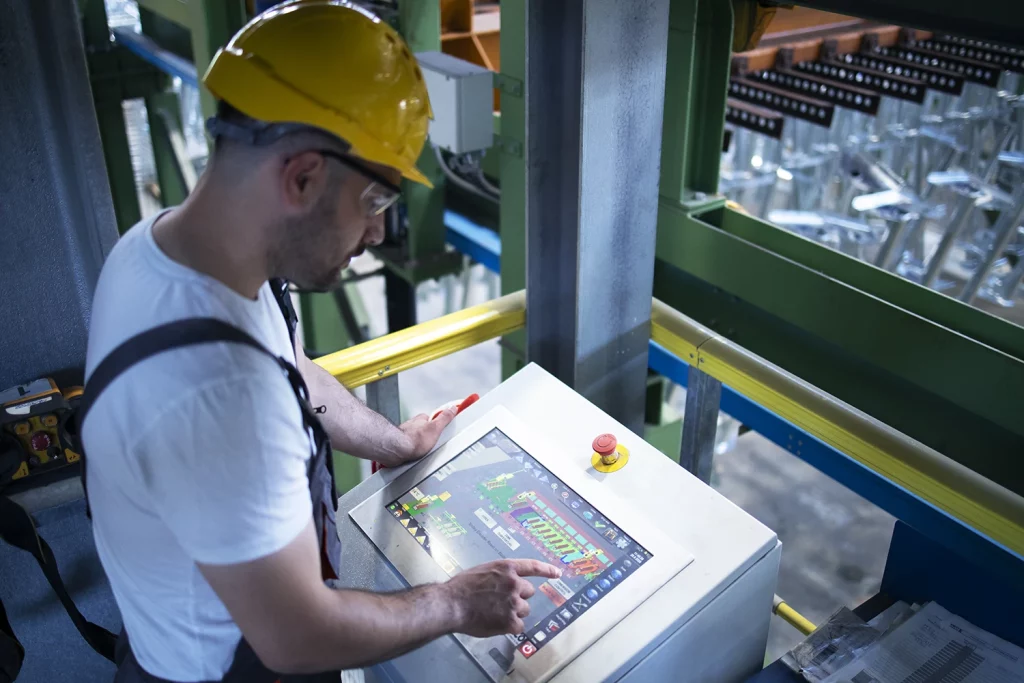
In the context of Industry 4.0, IoT-connected sensors have become strategic tools.
They enable real-time data collection for:
- anticipate breakdowns through predictive maintenance,
- optimize energy consumption,
- improve quality and traceability,
- remotely control equipment,
- better understand actual usage patterns.
Industrial IoT sensors thus transform field data into a lever for operational performance.
How to choose the right connected IoT sensor for your project?
Choosing an IoT connected sensor is not simply a matter of selecting a component from a catalog.
First and foremost, you need to start with the actual use: operating environment, measurement frequency, mechanical constraints, expected battery life. These factors determine the technological choices.
It is also essential to anticipate production volumes and ramp-up. A sensor that is perfectly suited to a prototype may become unsuitable or too costly in production.
Finally, the overall cost must be analyzed over the entire life cycle: manufacturing, maintenance, replacement, updates. It is often at this stage that industrial support can help avoid choices that block progress. IoT sensors and eco-design: concrete levers for reducing a product’s impact

The technical and industrial challenges of IoT sensors
Beyond technology, connected IoT sensors pose real industrial challenges.
Data security is a major issue, particularly in sensitive environments.
Long-term reliability must be guaranteed, sometimes over several years of operation.
Certifications (radio, safety, environment) must be anticipated from the design stage.
Finally, the transition from prototype to mass production requires a real mastery of industrialization.
It is often at this stage that the difference is made between a promising proof of concept and a product that can actually be deployed on a large scale.
How to successfully industrialize your connected object?
Industrialization is a key stage in the development and production of an electronic product. In this guide, our experts have put together 16 key points to help you understand what’s at stake in this phase.
The choice of IoT connected sensor is a key factor in the success of a connected product. It determines data reliability, system security, energy consumption, and also the product’s ability to be industrialized, maintained, and deployed on a large scale.
An unsuitable sensor can lead to additional costs, quality issues, insufficient autonomy, or production difficulties. Conversely, a sensor chosen in line with actual use, electronic architecture, and industrial objectives becomes a competitive advantage: a better product that is more robust, more reliable, and more durable over time.
This is why choosing an IoT sensor should never be considered in isolation from the rest of the project. It is part of an overall approach that incorporates product design, electronics, software, industrialization, and lifecycle.