

Faced with rising volumes of electronic waste, regulatory pressure and the increasing scarcity of certain resources, industrial companies are increasingly being forced to rethink the life cycle of their products.
Historically, the industrial model was linear: produce, sell, use, then throw away. Today, this model is showing its limitations, both environmentally and economically.
In this context, remanufacturing appears to be a particularly attractive industrial solution. It involves refurbishing a used product through a structured process, with the aim of restoring it to a level of performance equivalent to that of a new product.

In this article, find out:
- The definition of industrial remanufacturing and how it works
- The difference between remanufacturing, repair and reconditioning
- Why remanufacturing is becoming a strategic priority for manufacturers
- how to design a product that is compatible with a remanufacturing cycle
What is remanufacturing?
Remanufacturing, also known as industrial refurbishment, is a process that restores a used product to a level of performance equivalent to or better than that of a new product.
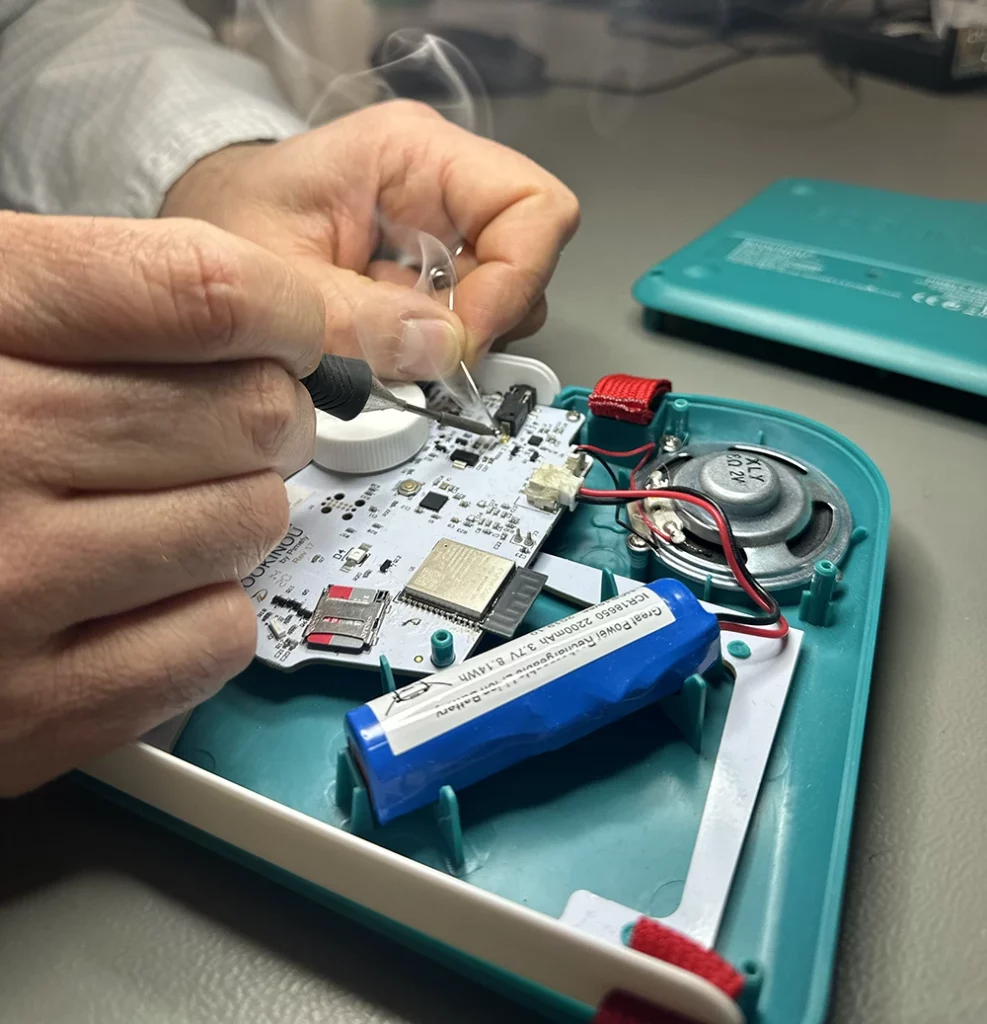
Unlike a simple repair, remanufacturing is based on a structured and standardised industrial process. The product is thoroughly analysed, dismantled, upgraded and tested before being put back on the market.
The aim is not simply to repair a fault, but to return a product to the production line, with guaranteed performance.
Remanufacturing, reconditioning, repair: what are the differences?
The terms used in relation to product refurbishment are often confused. Yet they refer to very different approaches.
Repair simply involves fixing a specific fault. When a product breaks down, work is carried out to replace or repair the faulty part. The product then continues to function as normal, without any comprehensive upgrade.
Refurbishment goes a step further. It involves restoring a used product to working order so that it can be resold. The product is usually cleaned, inspected and, if necessary, repaired, but it does not necessarily undergo a complete overhaul.
Remanufacturing, on the other hand, is a much more structured process. The product is completely dismantled, inspected and upgraded to meet industry standards. Critical components are replaced and the product undergoes comprehensive testing before being returned to the market.
In other words, remanufacturing aims to recreate a product that is equivalent to a new one, whereas repair and reconditioning are carried out on a more ad hoc basis.
This difference is significant, as it determines the level of performance, reliability and warranty that can be expected from the product being re-released onto the market.
The 7 stages of industrial remanufacturing
Remanufacturing is based on a structured industrial process comprising seven successive stages, each of which plays a vital role in the final quality of the remanufactured product.
1. Collection of end-of-life products
It all starts with the collection of products that have been used or returned by customers. Establishing an efficient logistics system is essential to ensure a sufficient volume of products and a standard of quality suitable for refurbishment.
2. Complete dismantling
The recovered products are then completely dismantled using non-destructive methods. Each component is separated to allow access to all parts and to prepare for the inspection and refurbishment stages.
3. Inspection and sorting of components
This stage is particularly critical. Components are inspected, tested and sorted to determine whether they can be reused, require refurbishment or need to be replaced.
4. Industrial cleaning
Before reuse, each component is thoroughly cleaned to remove impurities, residues or contaminants. Various methods may be used: chemical, thermal or mechanical cleaning.
5. Component refurbishment
Parts showing signs of wear can be restored using industrial processes such as re-machining, material build-up or certain surface treatments. This step restores the components to their original performance.
6. Replacement of non-compliant parts
Components that do not meet quality or performance standards are systematically replaced with new parts to ensure the reliability of the final product.
7. Reassembly and final qualification
The product is then reassembled to the same specifications as the original product. It is subsequently subjected to a series of rigorous tests and quality checks to ensure that it meets the original specifications. Once approved, the remanufactured product can be returned to the market with a level of reliability equivalent to that of a new product.
Through this process, remanufacturing helps to preserve much of the original product’s value, whilst reducing the consumption of raw materials and the environmental impact associated with manufacturing.
Why remanufacturing is becoming a strategic driver for the industry
The fact that remanufacturing is now attracting the attention of many companies is not solely for environmental reasons. It also addresses major economic and industrial challenges.
Reducing the carbon footprint of products
The manufacture of an industrial product generally requires significant resources: extraction of raw materials, industrial processing, component manufacturing, transport, etc.
A large proportion of a product’s carbon footprint is therefore concentrated in its manufacturing phase.
By reusing some of the existing components and structures, remanufacturing significantly reduces the environmental impact associated with production.
Retention of component value
In many electronic products, certain components account for a significant proportion of the product’s total value: circuit boards, sensors, radio modules, precision mechanical components, etc.
Remanufacturing helps to preserve this value by reusing parts that are still in working order rather than replacing them automatically.
Development of new business models
Remanufacturing also paves the way for new business models.
Certaines entreprises mettent par exemple en place des programmes de reprise produits, permettant de récupérer les équipements en fin de vie afin de les remettre sur le marché.
Others are developing models based on rental or the sharing economy, in which the product remains the property of the manufacturer.
In these models, remanufacturing becomes a strategic tool for extending the lifespan of products and maximising their economic value.

Why remanufacturing needs to be considered right from the product design stage
One of the main challenges of remanufacturing lies in the design of the products themselves.
Many companies realise too late that their products are difficult, if not impossible, to remanufacture. Components are glued together, assemblies are complex, parts are inaccessible, or certain technical information is no longer available.
To avoid these difficulties, it is essential to incorporate remanufacturing right from the product design stage.
It involves designing products in such a way as to make them easier to dismantle, repair and upgrade.
Several principles can be applied:
- give preference to detachable assemblies
- limit permanent bonding
- standardise certain components
- facilitate access to critical parts
- ensure the traceability of components.
How Altyor supports businesses in their transition to remanufacturing
At Altyor, remanufacturing forms part of a comprehensive approach to the product lifecycle.
Our teams work with companies right from the design stage to incorporate the principles of eco-design and sustainability. The aim is to design products that can be upgraded, repaired and, where appropriate, entered into a remanufacturing cycle.
Drawing on our expertise in mechatronics, industrialisation and production, we also help companies to establish the processes required for industrial refurbishment.
This may include:
- analysis of the product structure
- the development of decommissioning and refurbishment strategies
- the optimisation of industrial processes
- the establishment of reconditioning or remanufacturing processes.
👉 Discover our circular economy solutions

Would you like to incorporate remanufacturing into your product strategy?
Establishing a remanufacturing loop requires careful consideration of product design, industrial processes and lifecycle management.
👉 Talk to the experts at Altyor to develop your remanufacturing strategy.