

Robotics development with a trusted industrial partner
Altyor brings your robotics projects to life with over 35 years of industrial experience.
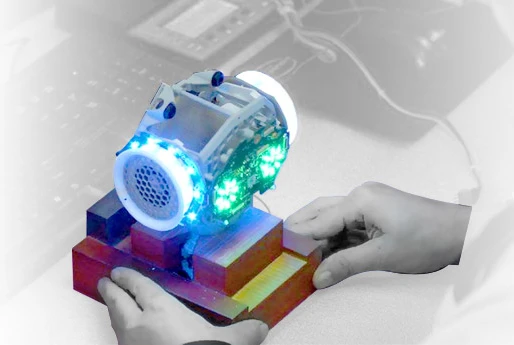
The Challenges of robotics development
Actuators, sensors, mechanics, etc.
Robotic development relies on the advanced integration of various hardware components.
From ideation to manufacturing your product
From concept to certified product, we control 100% of the value chain.

Industrial manufacturer for
over 25 years

+ More than 700,000 products/year
including 150,000 in France

Responsible manufacturing
Robotics sector and customer cases
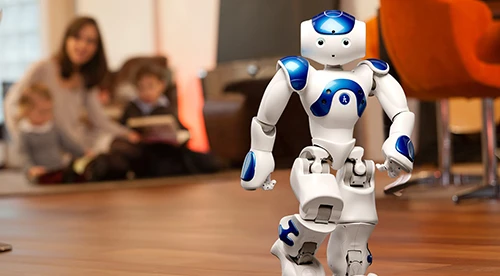
Soft Bank Robotics
Humanoid robot
Nao is a 58 cm humanoid robot that was created in the 2000s and has established itself as one of the most iconic robots in the fields of education, research, and human-machine interaction. Thanks to its 25 motorized joints, it can walk, dance, get up after a fall, or even perform expressive gestures to communicate.
Altyor’s role: mechanical design, prototyping, industrialization, and production of the head and arms
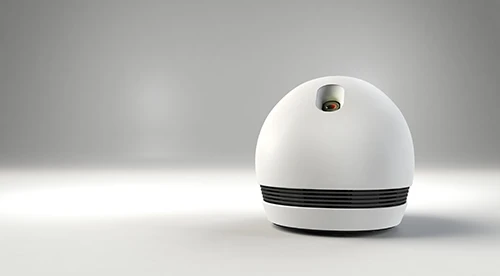
Keecker
Mobile multimedia robot
Keecker is an innovative French startup founded in 2013 that has developed a mobile multimedia robot designed to transform any surface into an interactive screen. Their goal was to make video projection mobile, smart, and social by combining robotics, projection, and high-end audio.
Altyor’s role: mechanical design, prototyping, and industrialization
Looking for an industrial partner to develop your robot?
Your project deserves a reliable industrial partner
Let’s discuss your needs and evaluate the best options together.
FAQ – Robotics development
How long does it take to develop a robot?
The development time for a robot depends heavily on its level of autonomy, mechanical complexity, electronic architecture, and intended use (industrial, service, medical, logistics, etc.).
On average, a robotics project unfolds in several phases:
Definition of requirements & robotic architecture: 4 to 8 weeks
Mechanical, electronic, and system design: 8 to 16 weeks
Prototyping and integration: 12 to 24 weeks
Testing, validation, and iterations: 8 to 20 weeks
Preparation for industrialization: 12 to 24 weeks
Thanks to its expertise in complex mechatronic products, Altyor supports its customers in reducing development cycles and ensuring a smooth transition from prototype to industrialized product.
What are the costs of developing a robot?
The cost of developing a robot depends on several factors:
– Mechanical and mechatronic complexity
– Sensors, actuators, and embedded systems
– Level of autonomy and safety
– Industrial constraints and production volumes
Altyor’s approach aims to optimize technical choices from the design stage in order to control costs throughout the robot’s life cycle.
Is it possible to produce a robot in micro series?
Yes. Micro-series production is a key stage in robotics projects.
It allows you to:
– Validate the robot’s reliability in real-world conditions
– Test assembly processes
– Adjust the design before larger-scale production
Altyor supports its customers in industrial pre-series production and prepares for ramp-up to series production.